Author Archive for nina – Page 6

  1. Fruit, fiber, healthy eating, nutrition, food combining, antioxidants, phytonutritents

    Eat your Fruits by themselves!

    Eat a high fiber diet.  Fiber helps prevent constipation, diverticulitis, irritable bowel syndrome and other digestive issues.  It can help you achieve or maintain a healthy weight.  Insoluble fiber, also known as roughage, is just as important.  Good sources are: vegetables, oat bran, chia or flax seed, nuts and legumes.

  2. Limit foods high in fat. Eat the good fats.  Pairing high fat foods with high-fiber foods helps with digestion.   Make your fat count!  Consume good quality oils such as olive, grapeseed cold pressed flax seed oil, or coconut oil in moderation.
  3. If you eat meat, make it lean, organic and infrequent.  Think of consuming animal protein as a condiment…small amounts can go a long way.
  4. Eat or take probiotics and digestive enzymes.  Eat these in “whole food” form when possible.  Probiotics are found in cultured foods such as sauerkraut, kimchi, or plain Greek style yogurt.  Digestive enzymes are abundant in raw fruit and vegetables.  When you eat cooked food, digestive enzymes supplements can and should be taken.  Try to eat raw foods daily.
  5. Stay hydrated!  Your body depends on it.  If you are taking any medication it is even more important. As we age we become more dehydrated.  Fatigue, confusion, constipation are just a few results of dehydration.  Try to drink clean, filtered water, instead of bottled.  Plastic contains estrogenic compounds that mimic estrogen (you don’t want this!).
  6. Exercise regularly.  We have all heard this million time but our bodies were meant to move.  Lack of movement contributes to aging and disease.  Find something you enjoy…and do it!
  7. Eat on schedule.  Many of us are hypoglycemic and eating small meals/snacks frequently, (every 2 to 3 hours), helps to maintain blood sugar levels.  Eat until 80% full, leaving 20% for digestion.  You will have more energy and metal clarity.  Stay away from the sugar and caffeine!
  8. Eat real food, not too much, mostly plants.  Avoid processed foods when possible.  This includes of course hight gructose soda’s and “fitness.”  Whole, organic, fresh food contains the nutrients your digestive system needs.
  9. Decrease or eliminate bad habits.  Do your best to let go of bad habits such as smoking, excessive drinking or alcohol or caffeine.  Clean house when it comes to your attitude and your thoughts.  Gratitude and positivity can go a long way!
  10. Combine foods properly. ( this is a complex subject so I have listed just a few tips)  Try to drink your liquid before you eat.   The digestive enzymes in your mouth, stomach and intestines will work better.   The typical American meal wreaks havoc on our digestive system.

  • Eat protein and not starchy vegies at same meal (no starch with protein)
  • Eat melons alone.  All fruit should be eaten alone, unless combined with probiotic plain yogurt.
  • Eat starchy foods and sugars separately.
  • Forget the desserts.  Eaten on top of a meal they require no digestion and ferment.  Bacteria turn the into alcohols, acetic acid and viniger.

Mashed Cauliflower

Mashed Cauliflower

Ingredients:

1 head of cauliflower

3 tablespoons milk (almond, coconut, or organic)

1 tablespoon butter

2 tablespoons light sour cream or plain Greek yogurt

1/4 teaspoon garlic or sea salt, freshly ground black pepper, snipped chives

Directions:

1. Separate the cauliflower into florets and chop the core finely.

2. Bring about 1 cup of water to a simmer in a pot, then add the cauliflower.(you can also steam)  Cover and turn the heat to medium. Cook the cauliflower for 12-15 minutes or until very tender.

3. Drain and discard all of the water (the drier the cauliflower is, the better) and add the milk, butter, sour cream, salt and pepper and mash with a masher until it looks like “mashed potatoes.”  (you can use a Cuisinart or an immersion blender)  Top with chives.

Nutrition : Low in calories, cauliflower is a cruciferous vegetable, high in fiber, vitamins C, B and K, calcium and potassium.  A power house of nutrients to include at any meal.

Ingredients   

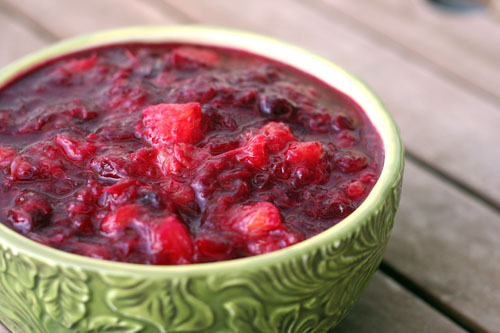
Healthy Cranberry Sauce


  • 2 (8-ounce) packages cranberries, fresh or frozen
  • 1 orange, zest cut into strips and juiced
  • ¼ cup stevia powder (check for sweetness, can add more)
  • 1 teas. vanilla
  • 1 cinnamon stick (optional)

Directions

Put all the ingredients into a saucepan over medium heat and simmer until the cranberries burst and the sauce thickens, about 15 to 20 minutes. Serve at room temperature or cool and refrigerate. Remove the cinnamon stick before serving.

Nutrition

We all know that cranberries are high in anitoxidants.  They are also a good source of Vitamin C, E and K.

Stevia is a natural sweetener that is not full of chemicals like Splenda or Nutra Sweet.  I recommend the Sweet Leaf variety for purity.  It has no calories and is not acidic like sugar.

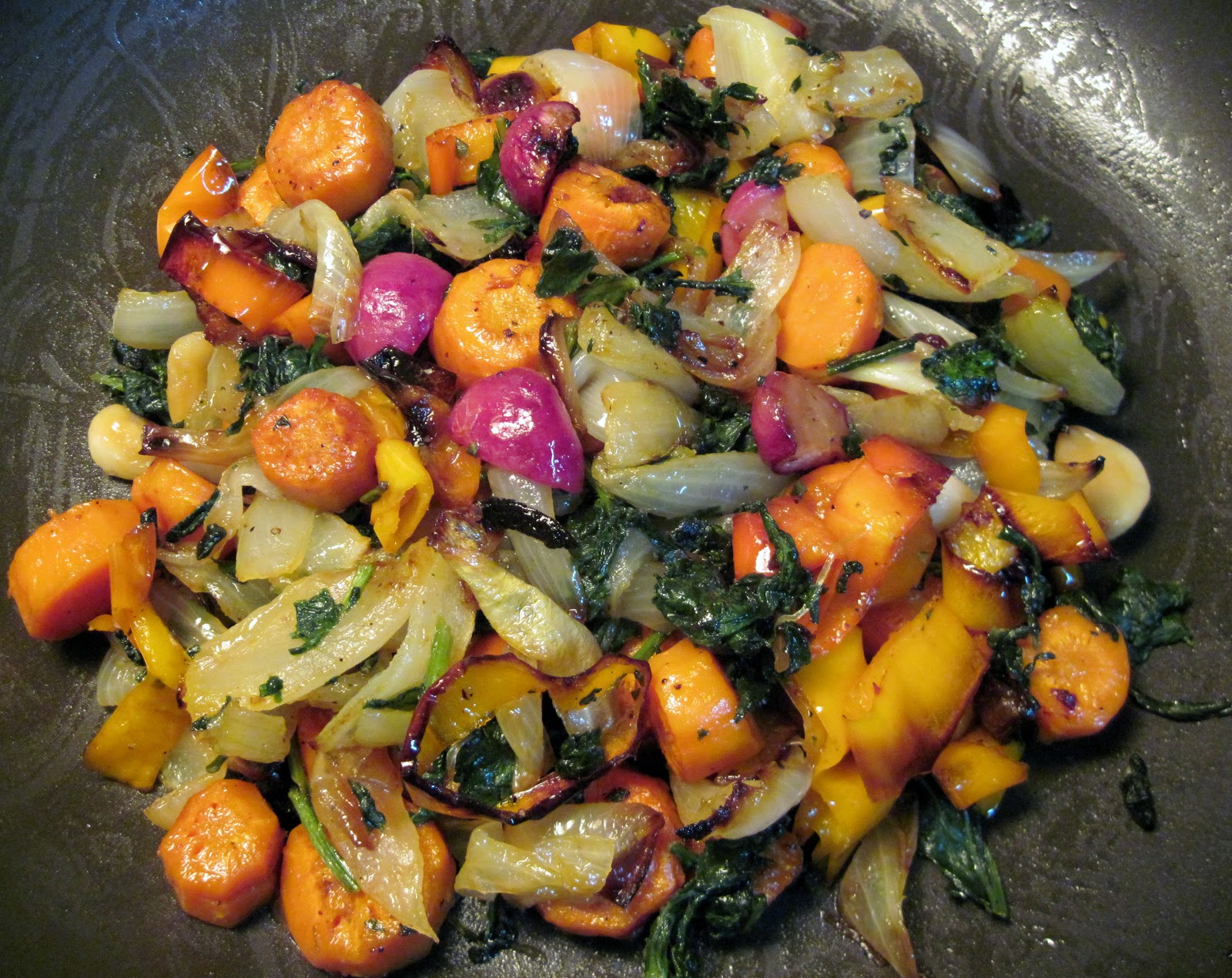
Roasted Root Vegetables

Ingredients

Roasted Vegies with Greens

6 Servings
  • 1 cup chopped, raw beet
  • 4 carrots, chopped
  • 1 onion, chopped
  • 2 cups chopped new potatoes and/or sweet potatoes
  • 4 cloves garlic, cut in half
  • 1/4 cup canned garbanzo beans (chickpeas), drained (optional)
  • 2 to 3 tablespoons olive oil
  • 1 tablespoon dried thyme leaves (or any herbs or your choice)
  • 1 tablespoon of Ms. Dash no salt herb blend
  • salt and pepper to taste
  • 1/3 cup dry white wine (water can be used)
  • 1 cup chopped beet greens, kale or spinach (or any greens of your choice)

Directions

  1. Preheat oven to 400 degrees F (200 degrees C).
  2. Place the beet, carrot, onion, potatoes, garlic, and garbanzo beans in a large bowl to mix with olive oil and herbs.  Pour onto a 9×13 inch baking dish.
  3. Bake, uncovered, in the preheated oven for 30 minutes, stirring once midway through baking. Remove the baking dish from the oven, and stir in the wine (water.) Return to the oven, and bake until the liquid has mostly evaporated and the vegetables are tender, about 15 minutes more. Stir in the greens, allowing them to wilt from the heat of the vegetables. Season to taste with sea salt and fresh ground pepper before serving

Nutrition  Although each root vegetable has its own nutritional makeup, as a group they are an excellent source of complex carbohydrates, fiber, potassium and antioxidants.  Mix and match your choices and enjoy!


Why is Digestive Health so Important?

Digestive System

Healthy Digestive Systems: The Second Brain

The digestive system is where vitamins, nutrients and minerals are absorbed.Factors such as stress, lack of sleep, antibiotics, illness, aging and poor diet choices can often lead to an imbalance of the bacteria in your digestive tract.  Maintaining a a healthy digestive system any time of year can be quite challenging, especially during the holiday season with typical eating patterns.  Consuming an abundance of rich and indulgent foods compromises our digestive health by flooding our bodies with large amounts of fat and sugar.  High fat holiday foods not only stay in the digestive system longer, but also cause more stomach acid to be produced, which can lead to gastric reflux and other issues.

Processed holiday foods (ie.instant mashed potatoes, canned gravy and cranberry sauce, breads, cookies etc.) maybe challenging for your digestive system: avoid these and your stomach will thank you.  It is always helpful to include cruciferous vegetables when possible.  I often notice that green vegetables are either missing or are a minor part of most holiday meals.  So think outside the “American diet” box and use fresh green beans, fresh greens, anything green and fresh! (organic if possible.)

Healthy digestion cannot exist without water.  Adequate hydration provides the digestive  system with the appropriate amount of moisture needed for proper functioning.  Sometimes our body mistakes hunger for thirst, so stay hydrated to prevent unnecessary overeating, and drink at least 8 oz. before your meals.

  • Probiotics and digestive enzymes are a healthy addition to any diet any time of year.
  • Raw Honey
  • Apple cider vinegar
  • Dry curdcottage cheese ( contains more probiotics)
  • Ocean-based plants such as spirulina, chlorella, and blue-green algae, seaweed (like Kombu)
  • Kefer (Sour beverage made from fermented milk, originated from Turkey)
  • Kim Chi (Spicy, pungent fermented cabbage, a typical and popular Korean dish)
  • Sauerkraut (Finely shredded cabbage fermented in brine, buy no sodium benzoate)
  • Tempeh (Indonesian food made from fermented whole soy beans)
  • Yogurt (organic, no sugars)
  • Probiotic food supplements in the form of pills, powders, capsules and drinks
  • Unpasteurized pickles, fro example, pickled beets, carrots or other vegetables, pickles and olives(farmers market is good source)
  • Miso (A fermented soybean paste or paste made from grains like rice, barley etc.) used as a sauce, soup base or spread: can be added to soups, gravy’s etc.)

Tips to help strengthen your digestion:
• Eat some raw and some cooked foods daily.
• Eat small meals often.
• Limit cold foods and cold drinks, and try to limit liquid during your meal (dilutes digestive enzymes.)
• Limit dairy and meat.
• Avoid eating proteins and grains and/or starchy vegetables in the
same meal.
• Avoid bread and pasta.
• Eat fermented foods and drink probiotic beverages.
• Use digestive enzymes.
• Use ginger, cinnamon, and turmeric.
I use and recommend Coconut water kefir, digestive enzymes,
and Vitality Green Food!  Please visit the Products tab on my
website and click on the Body Ecology banner to order.

I drink tulsi tea every morning. Tulsi tea is an ancient herb from India.  Some of the health benefits are:

  • Helping boost your respiratory system
  • Supporting your healthy vision
  • Delivering you antioxidant protection against free radicals
  • Helping you alleviate minor discomfort and irritation
  • Providing you with a calming effect and stress relief
  • Helping bolster your immune system
  • Aiding you in enhancing your stamina
  • Helping you promote a healthy metabolism
  • Boosting your digestive system health
  • Helping you maintain blood sugar levels in the normal range
  • Providing you with skeletal and joint support
  • Aiding you in supporting normal cholesterol levels

Order Today!

Texas Yoga Retreat 2012

Restorative Yoga

Restorative Yoga

Restorative classes are usually very relaxing and are a good complement to more active practices. The teacher will arrange for the necessary props to be available to you. The lights may be dimmed and if it is chilly, you may be covered with a blanket since you will not be warming up the body the way you would be in a regular class. After you are set up in a pose with all your props, you will hold the pose for an extended period, often ten to twenty minutes. Although you are supported, you will definitely still feel the stretch. It’s a relaxing style of practice that leaves you feeling open , relaxed and refreshed.


And here they are the following morning.  Refreshed and ready to go!

visit Texasyoga.com for more information.


Don’t suffer with a UTI!

Women are more prone to urinary tract infections than men, in part because of their shorter urethras. Adult men have another factor going for them—a bacterial growth inhibitor injected directly into their urinary system by their prostate glands.

Studies show that cranberry juice can help by promoting a healthy flora.  But drinking cranberry juice loaded with fructose potentially makes the problem worse!

But there is a great discovery that has come from the cranberry juice-urinary tract connection. The active ingredient in cranberry juice responsible for its benefit to your urinary system has been identified and isolated—and that is D-mannose.  It is not a drug.  It is a naturally occurring sugar, which does not raise your blood sugar levels.

D-mannose can be derived from berries, peaches, apples, and some other plants. Pure D-mannose is  10-50 times stronger than cranberry, non-toxic and completely safe, with NO adverse effects.  Amazing!

D-mannose can help cure more than 90 percent of all UTIs within 1 to 2 days!

But how can a natural sugar combat a UTI?

More than 90 percent of all UTI’s are caused by Escherichia coli (E. coli), which is normally found in your intestinal tract. Problems only arise when this ordinary bacterium is present in high numbers in places where it shouldn’t be—like your urinary system.  Bacteria attaches to the D-mannose and leaves the body as you urinate.  It usually takes 24 to 48 hours to work.  So if you find yourself with a UTI please consider using D-mannose instead of antibiotics.  I recommend that you get it in powdered form.  It is more effective.  For those of us in the Austin area you can get at People’s Pharmacy.


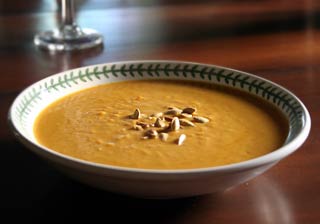
Pumpkin Soup

 This simple soup is low in calories, fat and sodium.  Pumpkins are high in vitamin A, zinc, iron, potassium and fiber.  Makes 8 Servings

Pumpkin Soup

Easy Pumpkin Soup

4 cups low-sodium vegetable broth

4 cups pumpkin puree (canned or fresh)

1 cup finely chopped onion

1 clove garlic

1 tsp. fresh thyme, chopped

salt and pepper to taste

2 Tbsp. light whipping cream (optional)

1 tsp. fresh parsley, chopped and 1/2 tsp. nutmeg (optional)


In a large pot over medium high heat add 3 cups broth, pumpkin, onion, garlic, thyme, salt and pepper.

Bring to a boil.  Reduce to low and simmer uncovered, about 30 minutes.

Puree mixture until smooth, in small batches, using a blender or food processor.  Return to pot.  Bring to boil.  Reduce to low and simmer uncovered for another 30 minutes.  Add remaining broth as desired.

Pour into bowls and serve with garnish and nutmeg.

Layered Vegetable Casserole (Everything but the kitchen sink!) with Vegan Cheese Sauce

Everything but the kitchen sink

A delicious warm veggie casserole for fall


This easy casserole helps you use up any veggies you have on hand.  The cheese is not really cheese but a sauce made from brewer’s yeast and almond or rice milk.  It is delicious and a good source of protein, folate and potassium!


Use what ever veggies you like such as:

Mushroom, kale, spinach, eggplant, collard greens sweet potato, celery,

zucchini, radish, etc., chopped or diced


  • Saute 1 onion and 2 cloves garlic in coconut oil or butter for 5 minutes
  • Add veggies and saute for 3 or 4 minutes with onion and garlic
  • Salt, pepper and favorite herbs to taste
  • Cheese sauce:
  • 1 cup rice, almond or coconut milk (unsweetened)
  • 1 cup brewers yeast flakes
  • 2 Tbs. flour (gluten free if desired, such as garbanzo or rice flour)

 Heat the liquid, stir in flour to dissolve and add brewers yeast.  Cook 1 minute or to blend.

Pour over veggie mix.

 Cook at 350 for 30 to 40 minutes.